This year’s Master Musicians of Joujouka Festival will be the best attended to date. The phone numbers for contact during the festival are Moroccan mobile 0624481100 or from outside Morocco or your mobile 00 212 624481100 or an alternative phone number . Should any guest miss their train or have transport difficulties or delays please call and we will ensure you are picked up in Ksar El Kebir and transported to the village. All the people of Joujouka are looking forward to a great festival.
Booking for the festival is now closed! For any last minute requests, media requests etc please phone the above numbers from Wed 6 June.
Sunday, June 3, 2012


Monday, April 9, 2012
Take me into insanity: In the Moroccan mountains, village musicians gather each year to worship the goat-man Boujeloud ... and Brian Jones. Mark Paytress
Take me into insanity: In the Moroccan mountains, village musicians gather each year to worship the goat-man Boujeloud ... and Brian Jones. Mark Paytress joins in the wild party
Mark Paytress
May 29, 2009 The Guardian
Joujouka, a village nestled in the foothills of the Rif mountains in northern Morocco, has been attracting enlightenment-chasing subversives and sonic novelty-seekers for decades. They are drawn by its Sufi trance music, played by the Master Musicians of Joujouka on a pipe called the rhaita and a drum called the tebel. In the 50s, Paul Bowles and William Burroughs visited, and the latter concluded: "We need more diabolic music everywhere." Timothy Leary proclaimed the Master Musicians to be "a 4,000-year-old rock'n'roll band". And in July 1968, Brian Jones of the Rolling Stones dropped in to record the village's Boujeloud - or Rites of Pan - festival.
That gruellingly intense annual night of music, magic and fertility still takes place every year, though the village has changed since Jones's visit: it now has electricity and a mobile phone mast that dwarfs the minaret of the mosque. Much, however, remains medieval: there is no running water, and the climate and landscape still dictate how life is lived.
When Jones's recordings were released posthumously in 1971, as The Pipes of Pan at Joujouka, the village gained a new level of fame - the guitarist was followed by more musicians, including Ornette Coleman - and Jones himself gained a new status in the village as a near-saint. Last July, I was among 40 or so westerners who went to Joujouka to mark the 40th anniversary of his visit. I often heard the Master Musicians chanting "Ah, Brahim Jones, really stones" as they worked through a rhythm.
The idea to commemorate Jones's trip came from Frank Rynne a frequent visitor to Joujouka since he stumbled on its music at a Burroughs-related event in Dublin in 1992. "Brian Jones is so revered here that I felt the anniversary of his visit should be marked," Rynne says.
However, the festival long predates Jones. Its origins lie in the legend of the goat-man Boujeloud bestowing the gift of music on the village in return for the hand of one of its women. Every year, the festival pays homage to Boujeloud in order to guarantee the village healthy crops and purposeful procreation. Much has been made of the magic and transcendence associated with this ancient fertility rite, but its real purpose is to heal. "Yes, the music makes people go into a trance," Master Musician Mohamed el Attar tells me, "but it also heals souls. Psychopaths get better when they hear it. That is the secret of this place."
As the ceremony begins, I follow the nine magnificently attired Masters - resplendent in yellow hats, white collarless shirts and dark, one-shoulder robes - as they make their way down a long, dusty track to a gently lit corner of the village square, where some 120 villagers and visitors are gathered. Without realising it, I perch upon the same rock Jones sat on 40 years ago, as the Masters hit their transcendent stride.
A group of watching youths, some dressed in baseball caps and logo-emblazoned T-shirts, bounce boisterously in front of the bonfire. Women huddle in the shadows. When the rhaitas, sounding something like a herd of aroused elephants, nudge up a semitone, the tingle factor really kicks in. A trick long favoured by a generation of superstar DJs is, it seems, as old as time itself.
Then out hops the sprite-like Boujeloud. Hours ago, he was the soberly attired master of the house where I slept. Now, this apparition in a straw hat and goat-skin is mad-eyed and rubber-necked; he thrashes me with a pair of olive branches. My fertility apparently secured, at least for another year, I leap to my feet and join in this primal scream of a party. For five long hours, these rhythms and rituals play out against a backdrop of spitting bonfires, screams and the endless high-jinks of Boujeloud. At about five in the morning, it winds down. "Boujeloud" is back in his bum-freezer jacket and handing out cups of mint tea to the small handful of us who have survived this exhilarating, extraordinary but exhausting musical endurance test.
When Brian Jones returned to London in August 1968, he spent hours in the studio doctoring his tapes with psychedelic effects (mainly phasing), in an attempt to accentuate the far-outness of an experience he likened to "an incantation to those of another plane". Many later sonic adventurers, working in jazz or rock or experimental music, have drawn inspiration from the music of Joujouka. Even the Stones milked what Mick Jagger admitted was "a tenuous musical connection" by using the Master Musicians on their 1989 Steel Wheels album.
Since that time, artists from the village have travelled to the west - drawn as much by the financial as the spiritual rewards - to perform music from Joujouka and the surrounding region. As we drive off at dawn the following morning, the first of the day's five calls to prayer ringing in our ears, I wonder whether I have just witnessed a long, loud, final blast of a tradition that's now staring extinction in the face. But Rynne is more optimistic. He says the event has brought enough money and supplies to the village to keep the place thriving until the winter - and that's before the cash from a planned CD/DVD release rolls in.
"You saw the young men last night," he smiles, referring to the mass outbreak of Boujeloud-inspired mayhem. "It's impossible to my mind that those boys, growing up in the houses of musicians, won't one day be picking up drums themselves."
Maybe so. But whether they'll stay put in Joujouka rather than try their luck on the international stage is, of course, another matter.
Booking for 2012 Master Musicans of Joujoka Frestival 8-10 June www.joujouka.net
Tuesday, April 3, 2012
Brian Jones and The Rolling Stones 1965
The 44th Anniversary Brain Jones/Master Musicans of Joujouka Festival takes places in 8-10 June 2012 in Joujouka Morocco. Booking www.joujouka.net
Info joujouka@gmail.com
Last 10 tickets available now
Tuesday, March 20, 2012
Master Musicans of Joujouka at the Stone Circle Glastonbury Festival 2011
The Master Musicians of Joujouka opened the headline, Pyramid Stage and the Glastonbury Festival in June 2011. For the rest of the weekend they played a series of impromptu sessions throughout the festival site. This was recorded at the megalithic stone circle at Worthy Farm on Saturday 25th June. Along the way the Master run into their friend the legendary photographer Jill Furmanovsky and their manager of old Rikki Stein. Such is the magic of Glastonbury Festival. The video was shot by Joachim Montessuis who collaborates with the Master Musicians for their Joujouka Interzone project. The musicians own festival is held in their village each June and is booking on www.joujouka.net.
For booking details email joujouka@gmail.com
Thursday, February 9, 2012
Major feature on the Master Musicians from TheQuietus.com

Master Musicians of Joujouka and Boujeloud opening the
Glastonbury Festival Pyramid Stage 2011. Photo Jill Furmanovsky/http://www.rockarchive.com/
Richie Troughton explores the history and current state of the two groups of Master Musicians , Master Musicians of Jajouka led by Bachir Attar and The Master Musicians of Joujouka/Jajouka. the artcile also reviews last summers triumphal return of Master Musicians to Glastonbury
Jajouka Or Joujouka? The Conflicted Legacy Of The Master Musicians
Richie Troughton , February 9th, 2012 13:04For decades, the music from one small village in Morocco has rung out internationally. But a long-running dispute between two separate factions of the Master Musicians of Jajouka/Joujouka has threatened to overshadow the success of both. Richie Troughton explores the legacy of the two groups and their current projects
For more see http://thequietus.com/articles/07488-master-musicians-of-jajouka-joujouka-glastonbury
Sunday, February 5, 2012
Master Musicians of Joujouka feature on new Rough Guide to the Music of Morocco
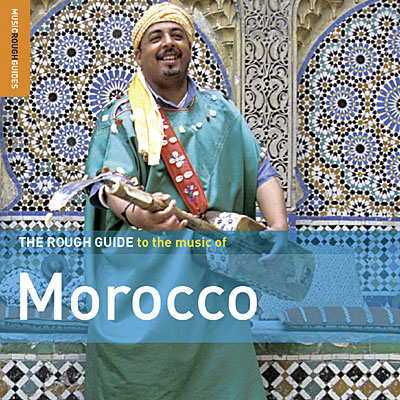
The Master Musicians of Joujouka feature on the new edition of the The Rough Guide to The Music of Morocco. The 2 CD set will be available this month in all good record stores, online stores and for download. The disc were compiled by Andy Morgan who managed Tinariwen.
The new Rough Guide to the Music of Morocco is a great entry to both contemporary and ancient styles. You can listen to clips here http://www.amazon.fr/gp/product/B006ZG3HT4/ref=dm_ap_alb4/276-2502358-0684362
Track List
CD1
01 Fnaïre Feat. Salah Edin: Sah Raoui
02 Compagnies Musicales Du Tafilalet: Compagnie El Hamri/Ya Rijal L'bled
03 Amira Saqati: El Aloua
04 Les Imazighen: Iberdane
05 U-Cef: Boolandrix
06 Lemchaheb: Moulana (Notre Chant)
07 Maalem Said Damir & Gnawa Allstars: Bania Bambara
08 H-Kayne: Jil Jdid
09 Samy Elmaghribi: Mal Hbibi Malou
10 Mazagan: Ya Labess
11 Master Musicians Of Joujouka: Mali Mal Hal M'Halmaz
CD2 - Bonus Album by Groupe Mazagan
01 Abdelillah
02 Ayli Ayli (Feat. Outlandish)
03 La Vignette
04 Atay
05 Ya Sidi Chafi (Duo)
06 Allah Allah
07 Sogui Belati
08 Salamo Salam
09 Asmae Allah
10 Instrumental
11 Ayli Ayli (Solo)
Release date 27 Feb 2012
Tuesday, January 24, 2012
Frank Rynne A Rolling Stone's Moroccan Odyssey from the Irish Time 22 July 2008
An article from The Irish Times from July 22 2008 by Frank Rynne Master Musiicans of Joujouka manager since 1994. To view the original article see http://brianjonesjoujoukafestival.blogspot.com/2009_03_01_archive.html and click on thumbnail
Booking for this year's Brian Jones festival has been swift but there are places available see www.joujouka.net or http://brianjonesjoujoukafestival.blogspot.com/2011/11/master-musicians-of-joujouka-festival-8_6513.html
A Rolling Stone's Moroccan Odyssey from the Irish Time 22 July 2008
The group’s founder member Brian Jones’s obsession with the haunting music of Joujouka is to be recalled at a Moroccan festival in his honour, writes Frank Rynne
WHEN I FIRST visited Morocco in 1994, I took a one-way charter flight to Malaga and a ferry across the Straits of Gibraltar. On one side of the Straits were the burnt hills of Southern Spain, on the other the high colossus of the Rif Mountains.
Soon I was standing in the ship’s restaurant being inspected by curious frontier police in line with Djellaba clad men, women in fine silk robes and the odd backpacker. Having had my passport stamped in Arabic script, I could stay up to three months. Arriving at Tangier port, I was assailed by offers of taxi rides, protection, and beggars. The contrast with the sedate south of Spain could not have been greater.
I made my way to the Café de Paris to meet Hamri. Hamri had famously brought Beat writers Paul Bowles, William Burroughs and the painter Brion Gysin to his village in the 1950s. In the 1960s, he had taken Rolling Stones founder Brian Jones and LSD guru Timothy Leary. By 1973, Ornette Coleman, the inventor of “free jazz”, had made the same pilgrimage to visit the Master Musicians of Joujouka. The musicians were described by Burroughs and Leary as a “4,000-year-old rock’n’roll band”. According to Gysin, the musicians held a secret, hidden even from themselves: they still practised “the Rites of Pan under the ragged cloak of Islam”. The “ragged” referring to the musicians’ poverty.
The Master Musicians of Joujouka are Sufi trance musicians from a tiny village in the Southern Rif Mountains. They play a form of trance music which is used for healing. Each year in the village, a boy is sewn into goat skins to dance as Boujeloud, who appears to Westerners as Pan. The flute-playing goat god is the protector of shepherd boys who brings fertility in springtime. The musicians play ancient music to drive Boujeloud back to his cave. With the beast appeased by their music, they can expect a good harvest. Women touched by his flailing palm fronds will bear healthy children.
Hamri took me to his studio, where beautiful paintings hung in various stages of completion. Soon the smell of linseed oil and canvas was penetrated by cumin, coriander and chicken as Hamri prepared his famous harira soup.
The next morning, we took a series of taxis to Joujouka, making the last leg of the journey on foot, up a steep impassable track. We were laden with meat, tea, sugar, mint and other basic provisions for the musicians, the mosque and the sanctuary of the village’s patron saint. Since the 9th century, Sidi Ahmed Schiech’s sanctuary in Joujouka has been a place of pilgrimage for the Ahl Srif tribe.
I first met the Master Musicians in 1992. I helped bring them to Dublin to participate in the Here to Go show at the old Project Arts Centre. The show, in honour of Gysin, was the first joint exhibition of his and Burroughs’ paintings. Gysin had invented the Cut-Up method of writing which Burroughs famously used to deconstruct the modern novel. Burroughs said of Gysin: “He was the only man I ever respected.” He died in 1986 having never achieved the recognition that Burroughs felt he deserved. Hamri and Gysin had exhibited together in the early 1950s. Having heard the Master Musicians of Joujouka, Gysin abandoned the Western art scene and spent 23 years in Morocco to be close to them and their music. It was Hamri who suggested that an art show for Brion would be incomplete without Joujouka music.
At Hamri’s house in the village, the musicians began to arrive singly and in small groups. I was overwhelmed by the welcome I received from the musicians who had been to Dublin. Soon a large group of cloaked men were sitting on the veranda. Tea was brewing and a tagine of lamb was slowly bubbling. Bamboo flutes, drums and sepsi pipes for smoking kif, a mix of mild marijuana and home grown tobacco, were produced.
The music began with long plaintive notes segueing into repetitive refrains and hypnotic drumming. This music is haunting and unworldly. They played the tunes left by their patron saint, which the musicians and their ancestors have played for centuries to heal illness and mental disturbances. They continued for several hours until dinner was served on a large plate from which we all ate communally.
After the meal, the musicians produced long mahogany double reed horns called rhiatas, which are similar to oboes. Their massed sound carries for miles in the little hills of the Ahl Srif.
The musicians use long extended notes and utilise circular breathing techniques. The horn players divide into sections and play extended loops following a lead section. They are loud as any rock band. IT WAS MY LOVE of the Rolling Stones and, in particular, the enigmatic talents of their founder Brian Jones, that first made me aware of Joujouka. In 1982, I saw the Stones in all their stadia glory at Slane Castle. The subtle elegance of Jones’ 1960s experiments with Eastern rhythm and instrumentation had been replaced by the hard edged, over-sexed blues rock that conquered the American mid-West.
Last week, I asked Anita Pallenberg what had set Brian Jones apart. “He was a renaissance man and a blues man, way ahead of his time,” she said. Anita had famously been Brian’s girlfriend when he entered a spiritual decline. Since his untimely death in 1969, the rock world has become all too familiar with such sensitive souls being crushed by the demands of an over-commercial oeuvre.
On July 29th, 1968, Gysin and Hamri brought Jones and his engineer George Chkiantz to Joujouka to record the Masters. For Jones, the experience was to dominate the last year of his life. His obsession with the music of Joujouka was yet another factor that distanced him from Jagger and Richards. Jones wished to incorporate it into the Stones’s sound.
John Dunbar was a friend of the Stones’s first manager Andrew Loog Oldham as well as Burroughs, Gysin and Jones. He remembers Brian on his return from Morocco coming to his flat to play the tapes. According to Dunbar: “Brian loved Joujouka and he hawked those tapes around trying to do something for the musicians. This really was going in a different direction from Mick and Keith.”
Brian spent the rest of the summer preparing the art work and sleeve design for the LP. In the studio he experimented, playing the music out of synch. Jagger recently said that Brian’s Joujouka experiments were the equivalent to scratching in the early days of hip hop.
In Morocco, Hamri, Gysin and the Master Musicians anxiously awaited the result of the star’s labours. The musicians had received some money and they hoped that Brian’s interest would rescue them from poverty by making their music popular in the West.
Hamri and Gysin had spent the 1950s and 1960s keeping the village going by employing troupes of musicians to play at their 1001 Nights restaurant in Tangier. Later, Hamri opened a second 1001 Nights in Asilah. It was in the latter that Jones first came to know the music and the musicians. Hamri would tell stories from his village to a reclining Jones. When Hamri would assume that Brian was asleep and stop his story, Brian would say in an English accent which Hamri imitated in recollection: “And then?” And the stories continued.
When the Rolling Stones set up their own record label in 1971, the first release was Brian Jones presents the Pipes of Pan at Joujouka. The cover painted by Hamri features Brian in the centre of the Masters. Some friends felt it was the least they could have done for Brian.
Over the last decade-and-a-half, I have visited Joujouka nearly 50 times, recording three CDs. Nearly all the older musicians who played on the Brian Jones record are now dead. Ahmed Attar, who at 12 years of age drummed on Pipes of Pan, leads the group in the village.
An old musician, Mujehid Mujdoubi, once asked me: “Why do you Irish people have swimming pools filled with milk, when the cows in Joujouka give barely one cup a day?” Having been to Ireland in 1980 as part of the group that appear in Bob Quinn’s Atlantean documentary, he was referring to a modern dairy farm so different from Joujouka’s medieval agriculture. IN 2006, BILLY Corgan of Smashing Pumpkins contacted me and came to the village. I was on my way there anyway to bring the group to Casa Da Musica in Porto. After a week, he felt the music was the loudest and most intense acoustic music imaginable.
The lure of stardom led one musician, Bachir Attar, who emigrated to New York, to claim he was the hereditary leader of the musicians. Although he was a toddler in 1968, this claim was readily accepted by music business executives, leading to Brian Jones’ LP being reissued in 1995 but bringing no benefit to the village. Hamri’s original cover art was replaced with by a contemporary photograph of Bachir. All mention of Hamri was excised from Brion Gysin’s original sleeve notes. Bachir trades under the eponymous “Master Musicians of Jajouka featuring Bachir Attar”. In contrast to the musicians in Joujouka, he states he likes to work in the studio. On July 29th, the Master Musicians of Joujouka host the Brian Jones 40th Anniversary Festival in the village square. Fifty Westerners will join the villagers for the festival of Boujeloud, celebrated to highlight Jones’ contribution to the village and promote peace. Last year, the musicians built a two-room guest house for visitors. The legacy of Jones still affects the music and musicians.
A standard song now in the village repertoire is Brian Jones Joujouka Very Stoned. The lyrics go: “Joujouka mezyana b sseyyed dyala (Joujouka is good because the Sanctuary is powerful)./ Oh Brian Jones Joujouka very stoned, Oh Brian Jones Joujouka Rolling Stone.
Master Musicians of Joujouka present the Brian Jones 40th Anniversary Festival in Joujouka, Morocco. www.joujouka.net Frank Rynne has produced three CDs of Master Musicians of Joujouka, Joujouka Black Eyes (1995), Sufi: Moroccan Trance (1996) and Boujeloud (2006). He is an historian currently researching the Fenians and the Land War 1879-1882.
Tuesday, January 17, 2012
Boualem Hamri and Frank Rynne Joujouka

Monday, January 16, 2012
Master Musicians of Joujouka website back online
Dear Friends after server change the website is back at www.joujouka.net
we are still booking for the last places at the 2012 festival
we are still booking for the last places at the 2012 festival
Sunday, January 15, 2012
Master Musiicans of Joujouka website www.joujouka.net will be down for 24 hours
Dear Friends , our official website www.joujouka.net will be down for a short period as we are changing servers and updating. We will have the site back up as soon soon as possible.Thank you for your patience at this time. It was essential to switch servers due to service issues.
Subscribe to:
Posts (Atom)